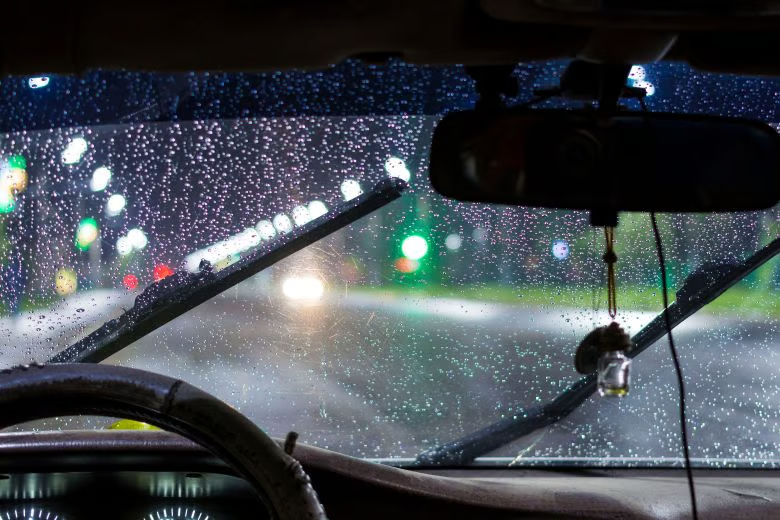
Driving a truck at night is completely different from driving a truck during the day. Low light conditions significantly reduce contrast and depth perception, decrease reaction time, cause distance distortion, and cover up some hazards that do not appear during the day. Thus, a pre-trip night vehicle check is not only a formality but is also a key safety routine that sounds like this: all the aspects visibility, control, and decision-making depend on you deciding to do a pre-trip check.
Driving with poor visibility is a combination of different factors like darkness, glare, weather, fatigue, and limited contrast. Just a single missed detail during pre-departure check may cause you serious visibility danger after your truck is moving. This guide outlines the necessary checks that must be done by the truck drivers for their night time safety, compliance, and preparedness on the road conditions.
Reasons Why Night Pre-Trip Checks Are Relatively More Valuable Than Daytime Inspections
The idea of night driving checks done is about compensating for what is beyond the human eye to perform. Such things as depth perception deteriorating, peripheral vision losing, and objects appearing later than expected. Under such circumstances, the car must be responsible for a larger part of the work. Night time safety depends on preparation rather than reaction, because errors made in darkness escalate faster and leave fewer recovery options.
A proper pre-trip night driving check should focus on:
- Increasing visibility to the maximum
- Correct vehicle lighting operation
- Reducing glare and blind spots
- Should be ready for suddenly low visibility situations
Mistakes made at night are usually harder to correct than the same errors made during the day.
Truck Driving at Night: ESSENTIAL TIPS
Exterior Lights: The Primary Visibility Tool
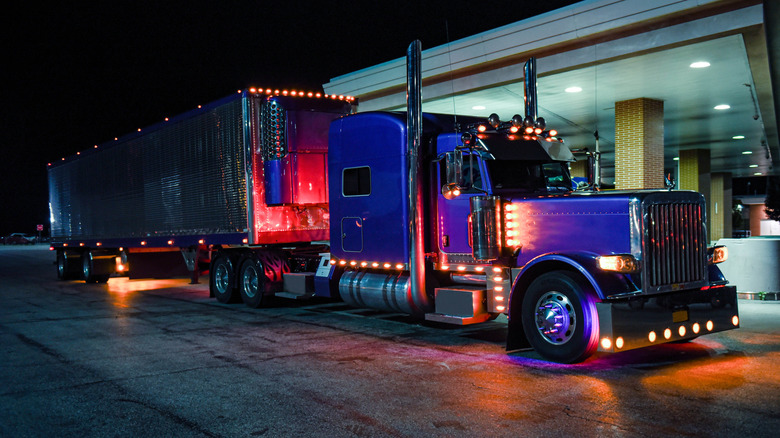
Functionality of Headlights
Headlights are the key to the safety of night driving. Before you drive, check:
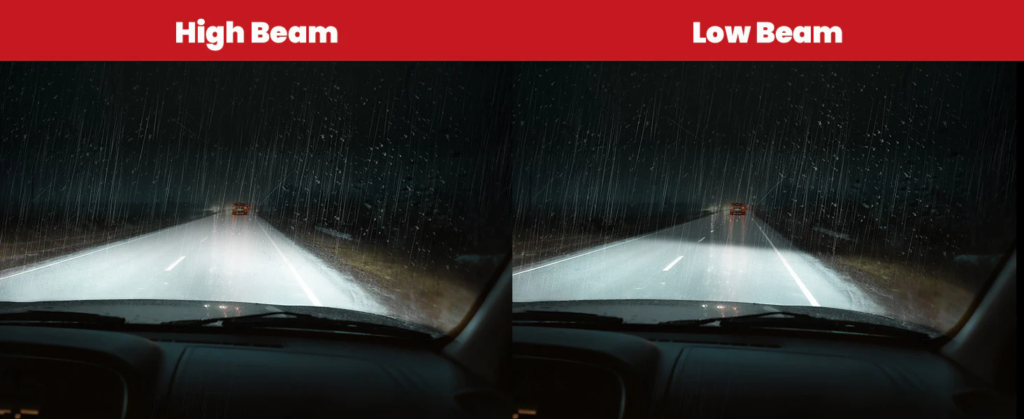
- Low beams and high beams
- Alignment (uneven beams reduce usable distance)
- Lens clarity (clouded lenses scatter light)
These essential checks are designed to eliminate visibility-related surprises before the truck enters low-light conditions.
Headlights functionality determines how early obstacles, curves, and road edges become visible, directly affecting stopping distance at night. Misaligned headlights cause insufficiently visible road sections and in-turn reflexive blinding of oncoming traffic, creating further visibility risks.
Usage of Fog Lights
Fog lights should be checked, even if there is no fog forecast. Their low, wide beam pattern helps to light the road after rain, mist, or in low-contrast conditions. Confirm:
- Both fog lights activate correctly
- Switches work independently
- Lenses are clean and unobstructed
Incorrect fog lights usage can reduce visibility rather than improve it.
Brake Lights and Marker Lights
In night driving, the signals played by you are what the other drivers depend on very much. In the vehicle inspection checklist:
- Confirm brake lights activate quickly
- Check the tail, side, and clearance lights
- Examine reflectors for dirt or damage
The exterior lights are the indicators of the truck’s size and location in the dark and are essential for overall road safety.
Windshield and Wipers: Visibility Begins at the Glass

The windshield glass has to be completely clear when there is low lighting. Just small streaks or smudges are acceptably noticeable when the light is bright, but at night they will create glare.
Windshield Inspection
Check for:
- Cracks or chips that scattering headlights
- Interior film buildup
- Bugs, dust or residue
Windshield Wipers
Wipers should be in excellent condition for the safety at night:
- No streaking or skipping
- Even pressure across the glass
- Washer fluid filled and functional
Rain at night combined with worn wipers dramatically decreases forward visibility.
Mirrors and Reflective Awareness
Rearview Mirrors and Side Mirrors
Mirrors ought to be adjusted for special night driving. Properly adjusted rearview mirrors are essential at night to control glare, track approaching traffic, and maintain spatial awareness in low visibility.
- Reduce blind spots
- Minimize headlight glare
- Ensure clear rear visibility
Clean mirrors thoroughly. Dirt reflects light unevenly and creates distortion in low light.
Reflective Vests and Surfaces
There should be a reflective vest inside the cab. Reflective vests dramatically improve driver visibility during roadside stops, especially under poor visibility conditions.
Night pre-drive safety also includes:
- Checking reflective tape on trailer edges
- Ensuring DOT markings are visible
- Verifying steps and grab handles are illuminated or reflective
These checks will help improve safety on the road during roadside stops.
Tires and Brake Visibility Indicators
Tire Condition
Tire condition plays a critical role in night driving stability, as reduced visibility leaves less time to react to traction loss or sudden failures.
Nighttime road conditions cause tire failures to be more dangerous. During pre-trip inspection:
- Check tire pressure visually and physically
- Inspect tread depth
- Look for sidewall damage
Finding a tire problem in the middle of the night is very dangerous.
Brake System Indicators
Although the function of brakes is mechanical, visibility plays a part:
- Assure brake lights function properly
- Check ABS warning indicators
- Make sure dashboard alerts are deactivated
Unexpected braking at night increases stopping distance and control loss.
Cab Preparation for Night Driving
Interior Lighting Control
Interior lights must not be lined on the windshield at any point. Adjust:
- Dashboard brightness
- Screen backlight levels
- Auxiliary lighting
Excessive interior light reduces contrast outside.
Essential Night Driving Tools
Include in pre-departure checks:
- Flashlight or headlamp
- Clean microfiber cloths
- Extra washer fluid
- Emergency triangles or flares
The key element of low visibility precautions is preparedness.
Adapting Driving Strategy After Pre-Trip Checks
A well-functioning vehicle does not fully eliminate risk.These driving tips are effective only when the vehicle has already been properly prepared during the pre-trip inspection. Behaviors, too, play an important role in safe night driving:
- Drive at slower than daytime limits
- Increase following distances
- Expect the delayed recognition of hazards
- Do not watch oncoming headlights
Visibility tips are most effective when the vehicle has already been prepared to support them.
Night Driving Hazards to Beware of
- The wild animals near the road boundaries
- Unlit vehicles or trailers
- Road debris outside of headlight range
- Construction zones with little markings
A proper night pre-trip helps anticipate these hazards instead of just reacting to them.
Truck Drivers – Nighttime Driving Safety Tips.avi
Night Pre-Trip Inspection Checklist for Poor Visibility
A night pre-trip inspection checklist that is organized in a way is not only a memory aid; it is a visibility management system. Drivers have diminished contrast, delayed risk awareness, and a narrower field of view at night. The pre-trip inspection list guarantees that no individual shortcoming enters the picture when the truck is in motion because it compensates for the limitations.
The involved inspection fields are all important for the early trouble detection and the vehicle recognition among traffic. The headlights and fog lights determine the forward visibility range and the road-edge awareness; brake and side markers tell the truck size, speed, and the direction to other cars. At night, lighting signals are the main rule for the drivers to form a car’s shape or to evaluate distance others.
Aside from being a factor in visual clarity, the windshield, wipers, and mirrors also influence the driver’s ability to distinguish the light accurately. Reflection problems like glare, smudges, or tarnished reflectors mislead eyesight and make thinking slower due to increased eye strain. These kind of issues are not comfort problems, but they are functional visibility risks that increase quickly after dark.
Tires and emergency gear appear to be not at all connected with visibility, however, night-time roadside stalls are one of the most hazardous predicaments a motorist can confront. Preventing needless stops through a proper tire examination, and with the same proper gear if one does become necessary, you are directly affecting the whole safety level.
The second table, in fact, reveals a distinction that is usually underestimated: vehicle visibility and driver visibility are not the same but they both are related and interdependent. A driver tired out by lack of sleep or one who’s been exposed to extreme glare can’t perform even a lighting system perfectly, no matter how much alert and healthy driving will improve visibility.
These two tables together present a central idea of driving at night: the preparation of the vehicle is a necessity before moving trouble-free. Visibility problems are much easier to settle when the truck is still and the checks are thorough. After getting on the road, choices shrink, and mistakes become tougher to fix.
| Inspection Area | What to Check | Why It Matters at Night |
| Headlights | Low/high beam function, alignment | Defines forward visibility range |
| Fog lights | Activation, beam clarity | Improves road-edge visibility |
| Brake lights | Instant illumination | Alerts following traffic early |
| Marker lights | Side and clearance lights | Defines vehicle size in darkness |
| Windshield | Clean, no glare, no cracks | Prevents light scattering |
| Wipers & washer | Even wipe, fluid level | Maintains visibility in rain |
| Mirrors | Clean, glare-adjusted | Reduces blind spots |
| Tires | Pressure, tread, damage | Prevents night roadside stops |
| Reflective tape | Intact, visible | Improves roadside safety |
| Emergency gear | Vest, flashlight, triangles | Critical in low visibility stops |
Consistent use of this checklist significantly reduces overlooked visibility hazards.
Driver Visibility vs Vehicle Visibility
| Visibility Type | Risk Factor | Mitigation |
| Vehicle visibility | Non-working exterior lights | Full lighting inspection |
| Driver visibility | Eye fatigue | Shorter night intervals |
| Vehicle visibility | Dirty reflectors | Cleaning during inspection |
| Driver visibility | Glare exposure | Mirror adjustment & visor use |
| Vehicle visibility | Dim brake lights | Bulb and wiring checks |
Safe night driving depends on both vehicle readiness and driver awareness.
Final Add-On Conclusion: Visibility Is a System, Not a Single Component
Nighttime safety is built through systems working together – vehicle lighting, glass clarity, mirror alignment, driver awareness and disciplined inspections. Poor visibility driving exposes weak points immediately leaving no room for shortcuts.
A thorough night pre-trip inspection transforms darkness from a hazard to a managed condition — where visibility is limited, preparation is the strongest safety feature a driver can have
Night-time safety is built during inspection, not improvisation. A thorough night pre-trip inspection is transforming poor visibility driving into a risk-free driving operation. Each check – from headlight functionality to windshield wipers – helps directly, drains driver awareness and time of reaction.
Professional truck drivers understand that darkness is not the enemy; unpreparedness is. Consistent night driving checks, disciplined pre-drive safety routines, and respect for nighttime road conditions are what keep trips safe when visibility is limited and consequences are high. Safe night driving starts before the wheels turn.