The National Road is referred to as one of the first large attempts at creating an overland route across the country and stands in the books of American transportation history as a very important landmark. Although it is primarily discussed as a success, its development can also be seen as the story of overcoming different breakdown, failure, and conduction that eventually led to the construction of new infrastructure and improved planning of future ones. From a trucker’s point of view, the National Road could be studied as the first version of a highway under duress.
The national road not only broke traffic rules but also taught them. The data collected considering the cause of the good and poor performance of the national routes provides the key to modern issues of traffic technique. Poor roadways impacted the overall road traffic situation; on the other hand, each difficulty was linked to the broader spectrum which included proper planning, material constraints, and operational restrictions that determined long-term service and usability.
This section forms the starting point of the overall chronology that later shaped how route performance was evaluated across American transportation corridors.
Impact on American History
The National Road was a venture aimed at the strategic linking of the east with the west. It was:
- A commercial trade corridor
- A westward expansion migration pathway
- A political opportunity for incorporating the national unit
As a transportation corridor, it is now a basis for highways and freight routes used by commercial vehicles today.
A historical point of view about the road is unique because it was the prototype. The decisions made in its design and construction affected how the future roadways were built. They dealt with:
- Strength under traffic
- Growing traffic loads
- Repair cycles and the provision of funding
The mistakes made in those times were the first in the line of lessons learned that made it possible to understand better what leads to the routes being unserviceable for a long time.
Seen today, this phase represents a detailed history of early route evaluation before formal standards existed.
The History of America’s Highways documentary
General Picture of the Construction Problems
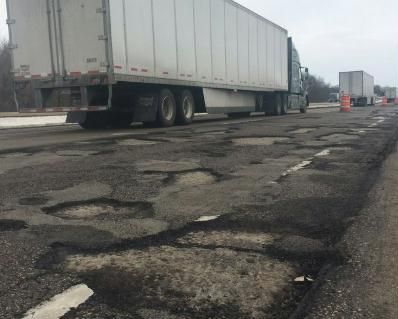
The National Road was under constant construction troubles caused mainly by the uneven relief, bad weather, and lack of materials. They were:
- Infrastructural problems due to unstable and uneven soil
- Seasonal floods and water retention issues
- Skilled labor shortages
- Inconsistent engineering standards
Also, these setbacks were responsible for partial route failure, thus, corrective actions have been repeated but were not solved once and for all.
Each of these challenges later appeared repeatedly in internal records resembling an early incident report rather than isolated construction flaws.
Main Construction Problems and Their Consequences
| Challenge | Operational Impact |
| Poor soil stability | Rapid surface degradation |
| Flooding | Erosion and impassable sections |
| Labor shortages | Inconsistent build quality |
| Lack of standards | Uneven long-term performance |
The absence of a standard for engineering practices caused the route to be divided into different shaped parts evolving at their own pace. Some of the sections were trafficked heavily but remained in good condition while others were quick to show deterioration.
Construction Technique Used
Clearing and Leveling the Terrain
Clearing and leveling were among the toughest labor-consuming parts of the construction process. Manual labor played the central role in the crews’ work so:
- Project timelines were impacted significantly
- Grading quality varied
- Drainage was poorly designed, limiting accuracy
Many times not enough leveling generated water retention and erosion, which in turn led to overuse of the area with traffic and to more frequent breakdowns.
From an operation analysis perspective, this period lacked risk management. Drainage planning was inconsistent, and little attention was paid to long-term maintenance needs, which had created recurring failure points.
These shortcomings highlight several critical steps that were underestimated during early route formation.
Materials and Techniques Used
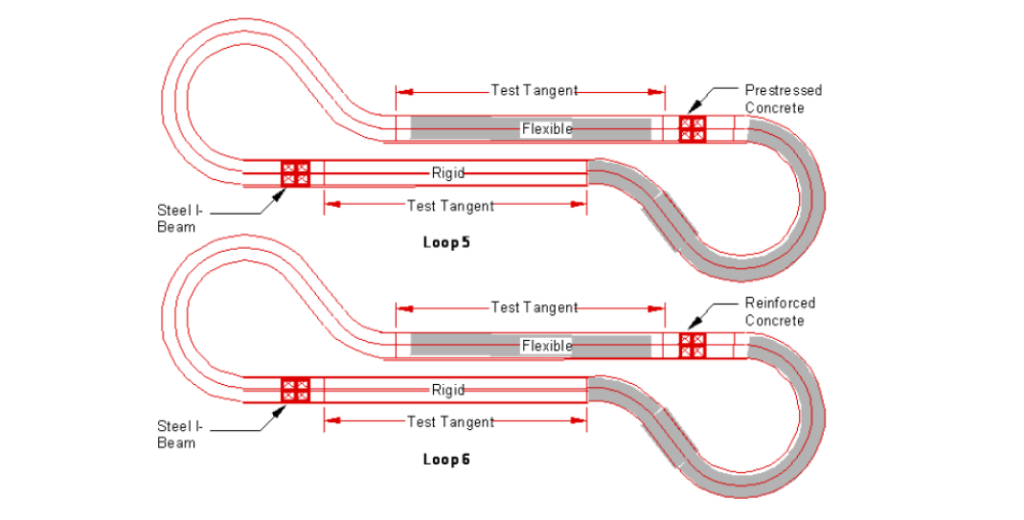
Initially, the National Road was made of stone and gravel before it was later fitted with macadam in some parts. The two approaches respectively had their advantages and disadvantages, such as:
- Stone and gravel: Very cheap but susceptible to erosion
- Macadam: Enhanced strength with the correct application
- Cut-off surfaces: Faster but more prone to wear and require higher maintenance costs
Some sections of the road presented a case of success by skillful layering of the materials that resulted in better load distribution, whereas others were not so far from bad quality.
Materials Used for Surface Layout and Performance
| Material Type | Strengths | Weaknesses |
| Stone & gravel | Cheap, easy repair | High erosion risk |
| Macadam | Adequate load distribution | Required skilled application |
| Mixed surfaces | Fastest construction | Inconsistent durability |
Accomplishments
Economic and Social Impacts
The National Road, notwithstanding its breakdowns, had a positive economic effect in the following ways:
- Faster inter-regional transport
- Stable freight transportation
- Boosting regional and inter-state trade
For earlier freight operators, it was more trustworthy than unpaved paths, leading them to the more socially beneficial outcome like saving access to different services and at the same time allowing to expand to the West.
Technical Innovations

The usage of macadam surfaces was like a new technology. The act of its proper application succeeded in laying the foundation for:
- Sturdier surfaces
- Less maintenance
- Re-constructing the established engineering guidelines
The innovation has demonstrated through goal-oriented correction what failure generally cannot do. The journey of the road is a model of how to learn from the breakdowns and not just to throw away the infrastructure.
These sections illustrate clearly what was right when applied consistently and with oversight.
Areas for Improvement

Labor Conditions and Workforce Issues
Workers’ conditions were tough, and the workforce was flowing. Specific issues in this regard were:
- Shortage of training programs
- Inconsistent supervision
- Physically draining work conditions
These human factors directly impacted the quality of work and played a part in some of the sections’ failure as a route.
Environmental Considerations
The risks to the environment were not adequately considered. The main things needed to be done in advance were:
- Proper water drainage
- Reinforced pavement in vulnerable areas
- Seasonal repair scheduling
The long-term maintenance costs were high due to the reactive maintenance approach taken, which also decreased the reliability of the road.
This phase documents clearly what went wrong when environmental planning was deferred rather than engineered.
What They Took With Them – and What They Left Behind
Influence on Future Infrastructure Projects
The National Road as was the first case in the restoration of old American infrastructure. Mistakes made, gave rise to:
- Standardized design
- Material testing protocols
- Planned maintenance schedules
The engineers shifted their focus to root cause analysis and planning for corrective action instead of carrying out repeated repairs.
Resurrecting the Past in Roads
In trucking and fleet operations the National Road has remained until now an example of a case study where route performance was under severe impact from e.g. design flaws. It shows that the effect of:
- Reliability for the long term
- Operating costs
- Intensity of maintenance
Can all be traced back to the decisions made in the very beginning of the road. The explicit report of what happened on this road puts emphasis on preventive measures, constant monitoring, and systematic operational reviews. Realizing what the decisions were made correctly and what should have been done differently, transport systems today can build more sustainable and resilient routes. Taken together, these lessons highlight a successful approach shaped not by perfection, but by adaptation, documentation, and learning from failure.
The History of Trucking: An Overview Through The Decades
FAQ
How can National Road be analyzed as a post-mortem case study?
National Road is a post-mortem case study of early infrastructure subjected to continuous stress and operational loads. From its failures, road maintenance, and systemic overhauls, transportation planners can learn how the factors you call out such as initial design, material selection, and professional discipline affected long-term performance. The comprehensive view allows today’s fleets and engineers alike to diagnose patterns present in highway and corridor freight planning.
What process improvement lessons does National Road give to current trucking routes?
The end result is one of the essential learning points, infrastructure performance benefits from the systematic collection and application of the failure feedback. National Road showed this principle in action when it kept track of the problematic zones, relay drought victories and sewing of the same template rules of repair that all of them resulted in more resistant practices. Such a process improvement ethos has become the cornerstone of modern routing, PM scheduling, and asset management.
What steps are today’s fleet operators likely to implement using this past experience as a foundation?
Fleet operators can take on the experience of the National Road by asserting the development of planning stages with preventive maintenance, risk assessment, and load forecasting. The road’s experience tells us that it is always going to be more costly to adjust to problems than it is to prevent them in advance. Systematic monitoring, record-keeping, and a constant review cycle are practices that modern transport systems adopt to not only prevent the repetition of errors made in the past but also to provide the necessary robustness on every mile action plan.
Final Assessment: Turning Route Breakdown into Operational Intelligence
Through the perspective of a contemporary truck driver’s views, the National Road is not just a mere transportation project that was set up for a very early experiment — but it is a full-life cycle of infrastructure evolution through pressure, adaptation, and learning. The relics of its historical past show that route breakdowns are not final endings but rather signs of a way to go. The road became better when the failures, which were noted, contrasted, and systematically addressed, were handled. However, the performance further degraded when the issues were overlooked or were fixed only in a temporary way.
The modern transport structures consist not only of techniques but also of agreement: everything, from disruptions treated as data, repairs seen as feedback, redesigns proposed as the possible root cause of failures, every adjustment, and every change that has been undertaken to improve stability in the future is seen as an outlet to improve permanently. The National Road is the one showing that the best way of building resistance is not to avoid failure but to respond to it in a smart way. The failure break history is turned out to be an operant advantage only with the proper structured action plan that is the one that is based on the right documentation, preventive thinking, and constant feedback.